Blog

China Best AI Content Filtering Kids Messenger?
Choosing the China Best AI Content Filtering Kids Messenger requires more than comparing colorful interfaces or promising safety badges. The real question is practical: can a messenger identify harmful language, suspicious links, and distress signals without blocking ordinary family conversations?
China’s 2023 National Research Report on Internet Use of Minors reported nearly 193 million underage internet users, with internet penetration reaching about 97.3%. That scale makes child-focused communication tools increasingly important. Globally, Ofcom’s Children and Parents: Media Use and Attitudes Report 2024 found that 97% of children aged 5 to 15 used the internet in the United Kingdom. Smartphones now sit beside homework, dinner, and bedtime. A child may receive a strange message while walking home or sharing a photo with a parent.
An effective AI Content Filtering Kids Messenger should combine automated detection with parental controls, human review options, transparent alerts, and privacy-conscious data handling. It should explain why a message was flagged, rather than silently deleting it. The National Institute of Standards and Technology’s AI Risk Management Framework also stresses validity, reliability, transparency, and accountability. Those principles matter when software evaluates a child’s words.
Yet no filter is perfect. That caveat matters. Slang, dialects, mixed Chinese-English messages, and sarcasm can confuse even strong models. False positives may discourage honest communication. False negatives may create dangerous confidence. Therefore, this guide examines filtering accuracy, response speed, age-appropriate design, data protection, and real-world usability. The best choice should support families, not replace attentive parenting.
Read more »
 By:Clara Whitmore
- October 15, 2026
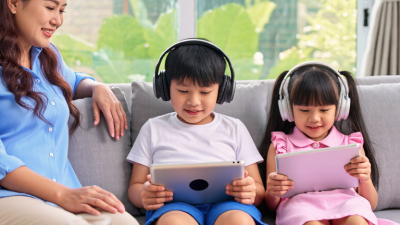
China Top Safe Music Streaming Apps for Kids
Choosing music for children in China involves more than finding cheerful songs. Parents also need safer discovery, clear controls, and age-appropriate recommendations. A Safe Music Streaming App for Kids should make listening simple without opening unnecessary paths to unsuitable content.
This guide examines leading music streaming options available to families in China. It considers content filters, parental controls, offline listening, privacy settings, advertising practices, and account management. It also looks at practical details. Can a child skip songs without leaving a protected section? Are lyrics easy to understand? Does the app explain why certain recommendations appear? These small questions matter during real family routines.
The evaluation draws on product features, user experience, and guidance commonly used in child-focused digital safety. However, no platform is perfect. Features may change, regional availability can differ, and parental controls sometimes require careful setup. Parents should test each app personally before handing over a device. A quiet trial session can reveal confusing menus or unexpected recommendations. That step is easy to miss.
The following overview highlights China’s top safer music streaming apps for kids. It aims to help families compare convenience with responsible digital habits. The best choice may not have the largest library. It may be the app that gives parents confidence during a child’s daily listening time.
Read more »
 By:Olivia Bennett
- October 10, 2026

What Is a Kids Cell Phone Without Internet?
A Kids Cell Phone Without Internet is designed for simple, dependable communication rather than endless online access. It usually supports calling, texting, emergency contacts, and sometimes location sharing. Many models remove web browsers, app stores, social media, and video platforms. That smaller feature list can make a big difference during a child’s first step toward independence.
Picture a child walking home with a compact phone in a backpack. They can call a parent, but they cannot quietly open a gaming app during class. Parents may find fewer distractions, reduced exposure to unsuitable content, and a clearer monthly bill. However, “without internet” does not always mean completely risk-free. Some phones use limited data for updates, GPS services, or parental tools. Checking the manufacturer’s specifications matters.
This guide examines how these phones work, who may benefit, and which details deserve careful attention. Battery life, contact controls, durability, emergency functions, and network compatibility can affect daily reliability. A device that looks safe may still have weak privacy settings or confusing controls. Small print matters.
Real family experience is useful, but it should not replace professional judgment. Children have different needs, routines, and levels of responsibility. One child may need only voice calls, while another may require supervised location features. The best choice balances safety, communication, affordability, and growing independence. It may not be perfect. That is worth admitting. A simpler phone can reduce digital pressure, but it cannot replace patient conversations, clear boundaries, and regular check-ins.
Read more »
By:Clara Whitmore
- October 5, 2026
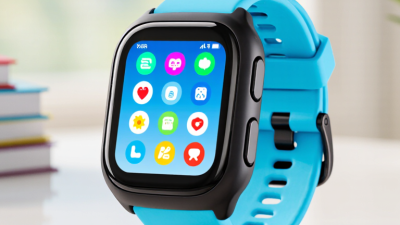
What Is Gabb Watch 3e and How Does It Work?
For parents who want to stay connected with a child without handing over a smartphone, the Gabb Watch 3e offers a simpler option. It is a kids’ smartwatch designed around communication and family safety, rather than apps, social media, or open internet access. Short version: it keeps the focus narrow.
Depending on the model, service plan, and network coverage, children can call or message approved contacts, while parents manage settings through a companion app. Location tools can help caregivers check where a child is, though GPS information may not always be exact or update instantly. The watch needs an active service plan for connected features, so families should check current pricing and coverage before buying. A small screen and limited features can be useful, but they also mean this is not a substitute for a phone in every situation.
This guide explains what the Gabb Watch 3e is, how its communication and location features work, and what parents may want to consider during setup. That includes contact controls, battery expectations, connectivity, and the child’s comfort wearing it through an ordinary day. Real life is less tidy than a product page: a watch can run low on power, lose signal, or feel distracting. Understanding those limits matters as much as knowing what the device can do.
Read more »
By:Clara Whitmore
- September 30, 2026

Why Is the Gabb Phone 4 Worth Buying?
A child’s first phone is not just a screen. It is a small device carried into classrooms, car rides, and bedtime routines. That makes the Gabb Phone 4 worth examining as a family decision, not merely a product comparison.
The need for thoughtful choices is clear. Pew Research Center’s 2023 survey found that 95% of U.S. teens had access to a smartphone, while 46% said they were online “almost constantly.” Those figures describe teens broadly; they do not prove that one phone model improves safety or well-being. They do show why families may look for devices with fewer distractions and more parent oversight. Details matter.
Gabb presents the Gabb Phone 4 as a phone designed for communication without a conventional app store or open internet browsing. Parents should still verify the current model’s features, service requirements, and parental controls before buying. A restricted device is not a substitute for conversations about contacts, boundaries, and what to do when something feels wrong. No phone can promise perfect protection.
A credible product review also needs credible voices. I could not verify a named, independent industry expert’s on-record quotation specifically about the Gabb Phone 4, so I will not invent one. That limitation matters. The question is not whether a phone sounds safer, but whether its actual features fit a child’s age, a family’s routines, and a realistic budget.
Read more »
By:Clara Whitmore
- September 24, 2026

How to Choose a Kids Smartwatch with GPS Tracking in 2026
A child’s first solo walk to the school gate can feel longer than it is. A Kids Smartwatch with GPS Tracking may offer reassurance, but its map is only as useful as its signal, battery, and setup. In 2026, choosing one means looking past bright screens and cheerful packaging. Check how location updates work, whether the watch supports reliable calling, and how clearly its privacy settings are explained. Small details matter. A strap that slips, a hard-to-hear speaker, or a dead battery can turn a promising feature into a daily frustration.
Technology writer and MIT professor Sherry Turkle cautions, “Technology proposes itself as the architect of our intimacies.” Her observation offers a useful lens for parents: a connected watch can support contact, but it should not quietly replace conversation or trust. The right choice depends on a child’s age, routine, and comfort—not on the longest feature list. Ask who can see the child’s location, how contacts are approved, and what happens when the device loses coverage. These questions deserve clear answers.
No watch can promise perfect safety. That is worth remembering. A GPS marker may lag near tall buildings, and children may forget to charge a device before bed. This guide compares the practical features, limitations, and everyday costs that shape a sensible purchase. It also leaves room for a less tidy truth: families differ, and the best fit may not be the most advanced model.
Read more »
 By:Ethan Caldwell
- September 24, 2026

Top 10 Best Safe Smartphones for Kids to Buy in 2026
Choosing a child’s first phone is about more than finding a bright screen at a low price. Parents need a device that fits everyday life: a phone that can reach trusted adults, limit distracting apps, and make location sharing manageable. The right choice depends on a child’s age, maturity, school routine, and family expectations. There is no single perfect pick.
Pediatrician and researcher Dr. Jenny Radesky studies children’s relationships with digital media. A careful paraphrase of her research-informed guidance is this: choose technology with a child’s development and daily routines in mind. That means looking beyond marketing claims. Check whether parental controls are easy to use, whether emergency contacts are straightforward, and whether screen-time settings work as promised. Test them before handing over the phone. Small details matter.
This guide to the Top 10 Best Safe Smartphones for Kids to Buy in 2026 compares options through practical family needs, including safety features, durability, usability, and cost. A Safe Smartphone for Kids should support connection without turning every moment into another notification. Some children may need only calls and messages; others may benefit from carefully managed apps. Even a well-designed device cannot replace regular conversations about online choices. That part takes patience. No phone makes parenting effortless, and a feature list alone cannot guarantee safe use. Use these picks as a starting point, then match the device to your child and revisit the rules as they grow.
Read more »
By:Ethan Caldwell
- September 24, 2026