Featured IP68 Waterproof Smartwatches
High-reliability wearable hardware custom-engineered for global importers, brands, and enterprise distributors.
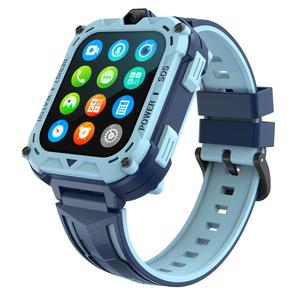
ZP 4G Android Children's Watch Kid Watch Parental Controls Dual SIM Card SOS GPS
- Dual SIM Cellular Connectivity
- Precise GPS Location Tracking
- Video Calling & Remote Monitoring
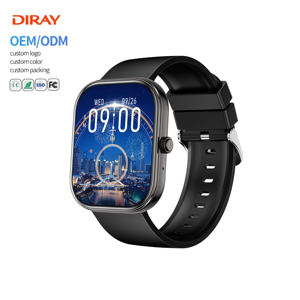
S3 Fitness Smart Watch 1.83 Inch IPS HD Display 100+ Sports Modes BT Call
- Heart Rate & SpO2 Biometrics
- Bluetooth HD Voice Calling
- 100+ Professional Sport Algorithms
WB55 IP68 Waterproof AMOLED Display Smartwatch with AI Voice Assistant
- Vibrant Always-On AMOLED Panel
- Integrated AI Voice Control
- Premium Ergonomic Silicone Band
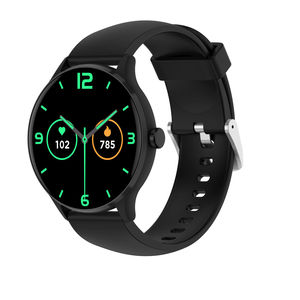
Reloj Inteligente Smartwatch Hombre IP68 Waterproof 1.26 Inch Round Screen
- Built-in Outdoor LED Flashlight
- 123 Specialized Activity Tracking
- Reinforced Shockproof Casing
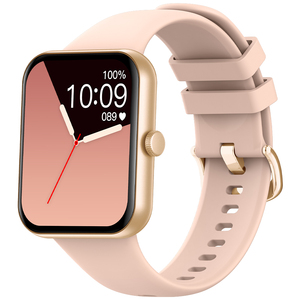
L32 Sport Smart Watch Men DIY Watch Face IP68 Waterproof Square Big Screen
- Fully Customizable Dial Interfaces
- Continuous PPG Cardiac Tracking
- Ultra-thin Lightweight Chassis
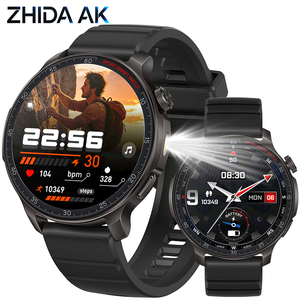
HT48 Round Smartwatch 1.46-inch 1000mAh Battery Flashlight IP68 Waterproof
- Extended 1000mAh High-Density Battery
- 1.46" High-Contrast Round Panel
- ODM Customization Available
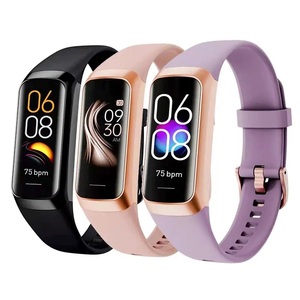
C60 Smart Watch 1.1 Inch AMOLED Screen 24-Hour Heart Rate & Sleep Monitoring
- 24/7 Precision Somnography & Cardiac Monitoring
- Sleek Compact Ergonomic Band Design
- Ultra-Low Power Consumption RTOS
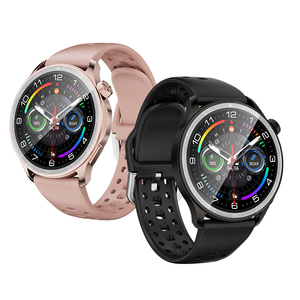
Customizable AW83 Smart Watch 1.43 Inch AMOLED AI Simultaneous Interpretation
- AI Real-time Speech Translation
- 1.43" HD Retina AMOLED Panel
- Waterproof Sports Micro-Architecture
Executive Sourcing Guide: IP68 Smartwatch Manufacturing Landscape
The global wearable technology market has undergone a fundamental shift. Ingress protection (IP) is no longer viewed merely as a luxury feature; it is now a non-negotiable baseline requirement for consumer, enterprise, and medical-grade smartwatch deployments. Among standard ratings, IP68 ingress protection—signifying complete dust-tight performance (Level 6) and continuous submersion capability in water exceeding 1.0 meter (Level 8)—represents the golden standard for rugged durability.
For B2B procurement managers, brand directors, and supply chain executives, sourcing IP68 smartwatches requires an in-depth understanding of microscopic fluid dynamic seals, ultrasonic acoustic membrane vents, automated pressure-chamber manufacturing protocols, and low-power silicon platform selection. This comprehensive whitepaper provides an engineering-level evaluation of the world’s top 10 IP68 smartwatch manufacturers and suppliers, detailing technical capabilities, production standards, OEM/ODM customization paths, and key strategic sourcing metrics.
Top 10 Global IP68 Smartwatch Manufacturers & Suppliers Matrix
The manufacturing ecosystem for waterproof wearables is concentrated within high-tech hardware hubs that integrate surface-mount technology (SMT) assembly, specialized tooling molding, micro-encapsulation, and automated testing labs. Below is an engineering comparison matrix evaluating the top 10 manufacturers across global supply chains:
| Manufacturer / Supplier | Primary Production Focus | IP Rating Compliance | MOQ Range | Core Processing Stack | Customization Depth |
|---|---|---|---|---|---|
| 1. Foxconn Technology Group | Tier-1 Flagship Smartwatches | IP68 / 5ATM / 10ATM | 50,000+ Units | Apple W-Series, Qualcomm Wear | Full Turnkey / Proprietary BOM |
| 2. Luxshare Precision Industry | High-Density Wearables & Medical | IP68 / ISO 22810 | 20,000+ Units | Custom ARM Cortex-M33, Nordic BLE | Full Hardware & System Customization |
| 3. Huaqin Technology Co., Ltd. | Mass Market Smartband & Watch ODM | IP67 / IP68 Certified | 10,000+ Units | Realtek RTL, MediaTek Wearable | ODM / White Label / Custom Casing |
| 4. Wingtech Technology | Enterprise & Cellular 4G Wearables | IP68 / MIL-STD-810H | 10,000+ Units | Qualcomm Snapdragon, UNISOC 4G | Full Hardware, OS, & Antenna Design |
| 5. Compal Electronics Wearables | Lifestyle & Fitness Smartwatches | IP68 / 5ATM Waterproof | 5,000+ Units | Ambiq Micro Apollo, Realtek | Co-Design / Custom PCBA & Firmware |
| 6. Shenzhen Effiya/Aicc Tech (Specialized OEM) | Agile OEM/ODM & Custom Branding | IP68 Hydrostatic Tested | 1,000+ Units | Realtek, JL Dual-Mode, Nordic BLE | Rapid Prototyping, SDK, Custom UI |
| 7. Inventec Corporation | Industrial & Telehealth Smartwatches | IP68 Industrial Grade | 5,000+ Units | ARM-based Ultra-low Power MCU | Custom Sensor Stack & Cloud Integration |
| 8. Goertek Inc. | Acoustics & Waterproof Micro-Vents | IP68 Waterproof Speaker/Mic | 15,000+ Units | High-SNR MEMS + Low-Power DSP | Acoustic Chamber & Waterproof Module |
| 9. Mobvoi Manufacturing Division | WearOS & AI-Powered Smartwatches | IP68 / Pool Swimming | 3,000+ Units | Qualcomm Snapdragon Wear Platform | WearOS Custom Apps & Neural Engine |
| 10. Shenzhen Smart-Watch Enterprise Co. | Kids GPS & Outdoor Tactical Watches | IP67 / IP68 Dynamic Seal | 500+ Units | UNISOC 8521E, Realtek 8763E | Flexible MOQ, Mold Tooling, App SDK |
Technical Deep-Dive: Mechanical Engineering & IP68 Ingress Protection
Achieving true IP68 waterproof performance requires solving complex mechanical engineering challenges. Liquid dynamic pressure, thermal expansion, micro-vibrations, and chemical degradation from salt water or sweat all threaten the structural integrity of smartwatches over prolonged use cycles.
1. Micro-Dispensing Glue & Liquid Silicone Injection Molding (LSR)
Modern smartwatch manufacturing relies on precision robotic fluid dispensing systems capable of laying down microscopic beads of hot-melt polyurethane or UV-curing acrylate adhesives. For buttons, charging pins, and heart-rate sensor windows, high-precision Liquid Silicone Rubber (LSR) overmolding is utilized. LSR provides exceptional elasticity, chemical immunity, and long-term resistance to compression set, ensuring seals maintain positive force against the casing under hydrostatic pressure.
2. Acoustic Waterproof Vents (e.g., Expanded PTFE Membranes)
Voice-enabled smartwatches featuring Bluetooth calling or AI voice assistants require open microphone and speaker ports. To allow acoustic wave transmission while totally blocking water molecules, manufacturers integrate micro-porous expanded Polytetrafluoroethylene (ePTFE) acoustic vents. These membranes feature pore sizes thousands of times smaller than a water droplet, capable of withstanding immersion depths up to 50 meters while maintaining sound clarity.
3. Hydrostatic & Vacuum Pressure Testing Protocols
Quality control for IP68 smartwatches is divided into two mandatory production verification phases:
- Dry Vacuum Testing: Every fully assembled casing undergoes differential air pressure testing. Rapid pressure drop readings isolate micro-fissures in real time without exposing electronic assemblies to moisture damage.
- Wet Hydrostatic Chamber Testing: Sample batches are subjected to automated water pressure chambers (ranging from 1.5 bar to 5.0 bar, simulating static depths from 15m to 50m) for duration holds up to 60 minutes. Subsequent thermal condensation checks confirm absolute internal dryness.
Our Manufacturing & Enterprise Strengths
Combining end-to-end hardware development, rapid ODM prototyping, and strict international compliance.
Full OEM/ODM Customization
Complete control over industrial design (ID), mechanical design (MD), custom PCB layouts, and bespoke firmware RTOS/Android customization.
IP68 100% Quality Assurance
Every single unit undergoes automated dual-phase air differential vacuum leak detection before leaving our ISO 9001 certified assembly line.
Ultra-Low Power Chipsets
Integration of cutting-edge SoC architectures (Realtek, Nordic, Ambiq) providing extended 7 to 30-day battery life despite continuous sensor tracking.
Advanced PPG Biometrics
Multi-wavelength optical photoplethysmography (PPG) arrays supporting continuous heart rate, SpO2 blood oxygen, stress, and sleep monitoring.
Open API & SDK SDK Integration
Comprehensive iOS and Android companion app SDKs, Bluetooth protocol documentation, and cloud API endpoints for seamless enterprise system sync.
Global Logistics & Certification
Full support for CE, FCC, RoHS, REACH, TELEC, and UN38.3 battery transport certifications, streamlining hassle-free international import customs clearance.
Strategic B2B Sourcing Trends & Future Technology Roadmap
As the wearable technology ecosystem matures, purchasing managers must align their product development roadmaps with upcoming industry transformations. Sourcing decisions made today will impact market competitiveness over the next 3 to 5 years.
1. Non-Invasive Continuous Biometrics & Multi-Sensor Modules
Next-generation smartwatches are moving beyond basic step counts and static heart rate monitoring. Leading manufacturers are actively integrating advanced micro-sensor arrays into IP68 sealed housings:
- Continuous Glucose Estimation & Lactate Tracking: Utilizing multi-spectral optical reflectance to track metabolic indicators non-invasively.
- Single-Lead ECG Arrays: Conductive titanium bezels combined with bottom-casing electrode plates for real-time arrhythmia (AFib) detection.
- Core Body Temperature Sensors: Micro-thermistor arrays bonded directly to the bottom glass substrate for precise circadian and fever tracking.
2. Edge AI Micro-Inference & Local Machine Learning
With the miniaturization of neural processing engines into ultra-low-power microcontrollers (e.g., ARM Cortex-M55 / Ethos-U55 NPU cores), smartwatches can now run local AI algorithms directly on the device. This enables offline motion gesture recognition, contextual health alerts, and instant local language voice translation without relying on active cloud connections.
3. Display Evolution: LTPO AMOLED vs. Micro-LED
Display technology accounts for up to 35% of a smartwatch’s total Bill of Materials (BOM) cost and battery drain. High-end procurement is transitioning toward Low-Temperature Polycrystalline Oxide (LTPO) AMOLED panels, which dynamically drop refresh rates down to 1Hz during idle states. Furthermore, early-stage Micro-LED panel development promises 5x higher luminance for crystal-clear outdoor readability in tactical and marine smartwatches.
4. Sustainable Sourcing & Eco-Engineered Materials
Global environmental mandates (such as the EU Corporate Sustainability Due Diligence Directive) are compelling manufacturers to adopt eco-friendly materials. Leading suppliers now offer post-consumer recycled (PCR) aluminum chassis, bio-based TPU straps, halogen-free PCB assemblies, and 100% plastic-free packaging options.
Frequently Asked Questions (B2B Sourcing & Procurement)
Clear, definitive answers to key technical and operational inquiries encountered during IP68 smartwatch vendor evaluation.
IP67 certifies protection against dust ingress and temporary immersion in water up to 1 meter deep for 30 minutes. IP68 mandates dust protection and continuous submersion in water deeper than 1 meter (typically up to 1.5m - 3m, depending on manufacturer specs). 5ATM (ISO 22810) signifies resistance to dynamic water pressures equivalent to 50 meters of depth, making it suitable for active surface swimming, high-velocity sports, and shallow diving. For marine or swimming-focused product lines, sourcing 5ATM/IP68 dual-certified devices is highly recommended.
For standard white-label OEM orders (custom logo laser-engraving, custom packaging, and pre-loaded software watch faces), MOQs typically start as low as 500 to 1,000 units. For deep ODM projects involving custom plastic/metal injection mold tooling, unique PCB layouts, and custom sensor integrations, MOQs generally start at 5,000 to 10,000 units due to high initial engineering (NRE) setup costs.
Reliable factories execute 100% online air differential pressure testing (non-destructive dry vacuum testing) on every unit before internal components are sealed. Additionally, statistical sampling (typically 3-5% of total production lots) is subjected to destructive hydrostatic water pressure tanks followed by oven baking and microscope moisture inspections to confirm zero micro-ingress.
Yes. Tier-1 suppliers provide full software integration packages, including white-label companion Android/iOS applications, source code SDKs, custom BLE GATT service definitions, and direct cloud API webhooks. This enables enterprises to seamlessly stream biometric data into proprietary corporate platforms, telehealth portals, or insurance monitoring systems.
For existing tooling with white-label software customization, standard production lead time is 25 to 35 calendar days from sample sign-off and deposit receipt. For full ODM projects requiring tooling design, prototype sampling, and international certifications (CE/FCC/UN38.3), total development turnaround ranges from 90 to 120 calendar days.
Ready to Launch Your Custom IP68 Smartwatch Project?
Partner with a trusted industry-leading OEM/ODM manufacturer. Request engineering drawings, factory audit reports, product catalogs, and custom price quotations today.