Recommended Children Locator Watches & Smart Wearables
Explore high-precision 4G/5G smartwatches, mini educational mobile terminals, and protective accessories manufactured for overseas brands, telecom operators, and wholesale distributors.
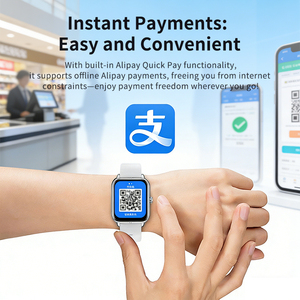
- Vibrant AMOLED Energy-Efficient Screen
- IP68 Deep Submersion Protection
- On-Device AI Voice Assistant Support
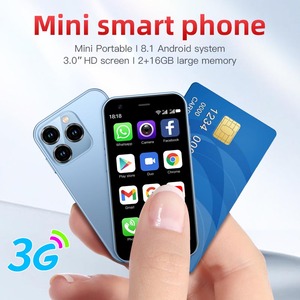
- Ultra-Compact 3.0" Pocket Form Factor
- Dual SIM Dual Standby Architecture
- Android OS for Custom App Deployments
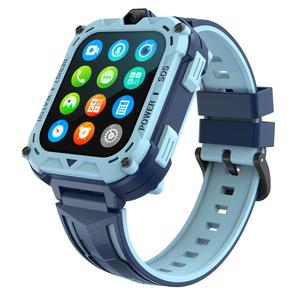
- Real-Time HD Video Calling over 4G LTE
- One-Touch Hardware SOS Distress Button
- Multi-Modal GPS+LBS+WiFi Positioning
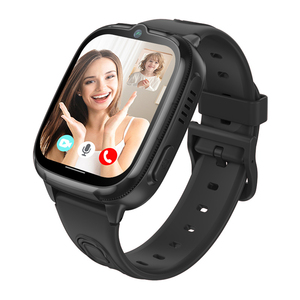
- Large 1.83-Inch HD Color Touch Display
- Distraction-Free Distant Class Mode
- Geo-Fence Boundary Breach Alerts
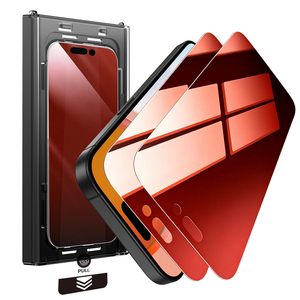
- Japanese AGC 9H Hardness Glass
- Oleophobic Anti-Fingerprint Coating
- Shatter-Proof Edge-to-Edge Protection
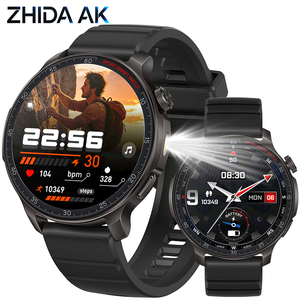
- Ultra-Long Life 1000mAh Li-Polymer Battery
- Built-in Emergency LED Flashlight
- Bluetooth 5.3 Clear Voice Calling

- High-Elasticity TPU Protection Film
- Self-Healing Thermal Clear Layer
- Universal Automotive & Device Fit
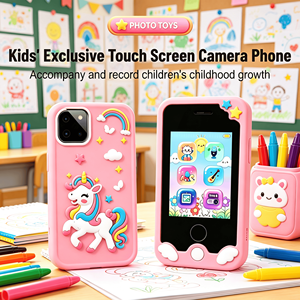
- Shock-Absorbing Food-Grade Casing
- Dual HD Cameras with Safe Filters
- Early Childhood Cognitive STEM Apps
Executive Summary: The China Supply Chain Blueprint for Kids Smartwatches
As the global wearable market shifts toward safety-focused tech for children, China’s manufacturing ecosystem in Shenzhen and Dongguan remains the premier hub for global original equipment manufacturers (OEMs) and original design manufacturers (ODMs). Sourcing kids locator watches requires balancing hardware durability, precise tracking technologies, radio frequency compliance, and rigid software privacy frameworks like COPPA and GDPR.
This comprehensive industry guide delivers crucial B2B insights for telecommunication brands, electronics importers, and hardware startups. Learn how top-tier Chinese suppliers integrate multi-constellation GNSS engines, low-power cellular RTOS platforms, custom Android ROMs, and tamper-resistant parental control architectures into scalable child tracking products.
Technology & Engineering Development Trends (2026–2030)
Understanding the hardware evolution and software security innovations driving modern children's cellular locators.
Global Procurement Trends: What OEM/ODM Buyers Need to Know
Procuring child locator watches from Chinese manufacturers involves much more than evaluating unit price. Today’s international telecom enterprise standards require comprehensive turnkey solutions encompassing hardware customization, mobile device management (MDM) backends, and strict data sovereignty controls.
1. Turnkey Private Labeling vs. Full ODM Co-Development
B2B buyers generally operate in two distinct procurement tracks:
- White-Label OEM (Fast Time-to-Market): Utilizing pre-certified public hardware moulds (e.g., D53, ZP-04 series) with customized firmware, localized companion apps (iOS/Android), custom brand boot logos, and unique retail packaging. Lead times range from 15 to 30 days.
- Custom ODM (Proprietary IP): Developing exclusive tooling, bespoke PCB layouts, optimized antenna geometry (LDS/FPC antenna design), and specialized kernel-level OS features. Development cycles require 90 to 150 days from industrial design (ID) freeze to mass production (MP).
2. Data Sovereignty & Cloud Platform Infrastructure
Global privacy regulations demand that GPS telemetry data collected from minors must be encrypted in transit and at rest. Leading Chinese manufacturers now offer flexible cloud backend deployment:
- AWS / Azure / Google Cloud Localization: Hosting telemetry server instances in regional data centers (e.g., Frankfurt for EU GDPR compliance, Virginia for US COPPA compliance).
- MQTT & HTTPS Protocol Integration: Standardized socket protocols enabling corporate buyers to point device telemetry directly to their own proprietary cloud databases, bypassing third-party servers entirely.
3. Regulatory Certifications & SAR Safety Compliance
Child safety products undergo intense scrutiny at customs. Leading suppliers provide turnkey support for international testing protocols:
- FCC Part 15 / 22 / 24 & CE RED: Radio frequency emission and spectrum efficiency validation for multi-band 4G networks.
- Specific Absorption Rate (SAR) Compliance: Ensuring head and wrist SAR limits fall well below strict international caps (1.6W/kg over 1g of tissue in the US, 2.0W/kg over 10g of tissue in Europe).
- RoHS, REACH & UN38.3: Hazardous substance restriction and battery transport safety certifications for lithium cells.
Why Partner With China’s Leading OEM Wearable Manufacturers?
Discover the industrial capabilities, quality control pipelines, and hardware engineering standards that make China the premier choice for global child safety device brands.
Frequently Asked Questions (B2B Sourcing & Manufacturing)
Direct technical answers to common questions asked by hardware buyers, brand owners, and procurement managers.
What is the typical Minimum Order Quantity (MOQ) for OEM/ODM orders?
For ready-to-ship standard models with custom laser-etched branding or localized packaging, MOQ starts at 500 to 1,000 units. For full OEM customized housing colors, custom firmware flashing, and private cloud app integration, standard MOQ is 3,000 units. Custom industrial design (ODM) projects typically require 5,000 to 10,000 units depending on tooling complexity.
How do Chinese manufacturers guarantee compliance with US COPPA and EU GDPR regulations?
Compliance is achieved through a multi-tiered security structure: First, the device software contains zero open web browsers or unvetted social media platforms. Second, companion parent apps utilize TLS 1.3 encrypted sockets for data transmission. Third, telemetry data is routed directly to regional cloud servers (e.g., AWS Frankfurt or AWS N. Virginia) owned by the client, ensuring child data never crosses unauthorized borders.
Can hardware specs be adapted to specific regional 4G cellular bands?
Yes. Our manufacturing partners produce motherboards populated with regional RF front-end modules. We offer specific SKU variations covering North American bands (B2/B4/B5/B12/B13/B66/B71), European/Asian bands (B1/B3/B7/B8/B20/B38/B40), and Latin American configurations, guaranteeing seamless VoLTE voice call and high-speed data operation globally.
What positioning technologies are used, and how accurate is indoor tracking?
Devices combine dynamic 5-stage hybrid location technology: GPS (US), GLONASS (Russia), BDS (China), Wi-Fi hotspot MAC address lookup, and LBS base station cell-ID indexing. Outdoors, GPS delivers location precision within 2.5 to 5 meters. Indoors, Wi-Fi location mapping provides positioning accuracy within 10 to 30 meters, bypassing blocked satellite signals.
What is the turnaround time for sample delivery and mass production?
Pre-production golden samples with custom software ROMs are delivered within 7 to 10 working days. Upon sample approval and deposit receipt, mass production lead time is approximately 25 to 35 calendar days for standard order volumes (up to 20,000 units).
Are warranty, spare parts, and after-sales technical support included for international importers?
Standard OEM agreements include a 12-month quality guarantee. Importers can select between receiving 1% spare units (or key components like screens, straps, and battery packs) free of charge with the shipment or utilizing factory repair services. Full technical API/SDK documentation and engineering support are provided for cloud server integration.
Step-by-Step Blueprint for Successful B2B Sourcing
Navigating the child safety wearable manufacturing landscape requires a clear risk-mitigation framework. Follow these industry best practices when establishing your manufacturing pipeline in China:
Phase 1: Defining Technical Product Requirements (PRD)
Before contacting suppliers, freeze your product specs: Target age group (e.g., 4-7 years watch phone vs. 8-14 years tween hybrid), required ingress rating (IP67 vs. IP68), cellular band coverage, battery capacity goals, and target retail pricing. Establishing clear PRDs prevents costly tooling mid-course adjustments.
Phase 2: Factory Audit & Quality System Evaluation
Ensure candidate suppliers maintain certified quality management systems including ISO 9001, BSCI, or ISO 14001. Verify that SMT lines, assembly workshops, and aging test rooms are housed within the same facility or closely monitored under strict vendor management programs.
Phase 3: Firmware Customization & OTA Update Architecture
Ensure your manufacturing partner provides robust Over-the-Air (OTA) firmware update support. As cellular network protocols evolve and security patches emerge, the capability to push remote system updates to end-user devices ensures product longevity and reduces customer return rates.
Phase 4: Pre-Shipment Inspection (PSI) Criteria
Implement strict Acceptable Quality Limit (AQL Level II Major 1.0, Minor 2.5) inspection standards. Verify cosmetic finish, touchscreen latency, battery charge-discharge curves, waterproof integrity, and radio frequency output power prior to authorizing final balance payments.
Ready to Build Your Next-Gen Kids Locator Watch Line?
Partner with China’s leading smartwatch manufacturing experts. Contact our OEM/ODM engineering team today for factory direct pricing, technical specs, and sample evaluation kits.
Contact Us