Featured Keypad Phones, Smart Accessories & Kid Wearables
Directly sourced from Shenzhen & Dongguan manufacturing centers with custom firmware, SMT assembly, and global carrier certification compliance.
China Best Push Button Phone Factories: Executive Sourcing Guide
As global telecom networks transition away from 2G and 3G infrastructure, the international marketplace for push button phones—commonly referenced as feature phones, keypad mobiles, senior cell phones, or digital detox devices—is undergoing a technological renaissance. Far from obsolete, physical keypad devices remain essential telecommunication lifelines for emerging market connectivity, specialized industrial work environments, senior citizen care, and privacy-conscious consumers seeking distraction-free mobile experiences. B2B importers, telecom operators, and brand owners seeking to partner with China best push button phone factories must navigate complex hardware specifications, chipset transitions, localized RF band certifications, and custom operating system integrations.
Information Gain Takeaway: Modern push button phone manufacturing is no longer about low-cost legacy assembly. Leading OEMs in Shenzhen and Dongguan integrate 4G LTE VoLTE SoCs (such as Unisoc T107/T117 or MediaTek MT6739), specialized acoustic amplification for elderly hearing aids, IP68/IP69K ruggedization, and locked-down kiosk firmware for safe kids/senior deployments.
Market Dynamics & Emerging Demand Drivers for Keypad Phones
The global push button phone sector continues to generate robust shipment volumes across several key demographic and commercial verticals:
Senior & Accessibility Telematics
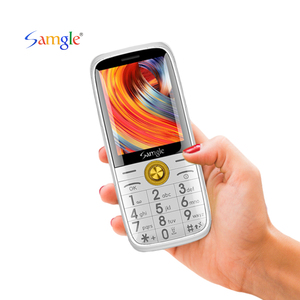
High-volume demand for extra-large tactile keypads, high-decibel acoustic speakers (with M4/T4 hearing aid compatibility), dedicated one-touch SOS panic buttons linked to GPS/LBS location servers, and charging docks for effortless home placement.
Kids & Teen Digital Detox
Driven by parental demand for safe technology (pioneered by brands like Gabb), factories produce customized push button phones lacking open web browsers or social media, equipped with parent-controlled contact white-listing and AI text filtering.
Industrial & Outdoor Rugged
Heavy industrial, logistics, and mining sectors require drop-proof (1.8m concrete impact), dust-tight, and waterproof (IP68/IP69K) push button devices with physical keypads operable while wearing heavy protective work gloves.
Core Engineering Standards in Top Chinese Push Button Phone Manufacturing
Selecting an elite OEM/ODM manufacturing partner in Guangdong requires rigorous evaluation of their engineering stack, SMT line capabilities, and quality control protocol execution. Premier factories maintain state-of-the-art Surface Mount Technology (SMT) cleanrooms and automated optical inspection (AOI) systems capable of populating high-density circuit boards with microscopic component accuracy.
1. Hardware & Chipset Architecture
Modern 4G keypad devices rely heavily on cost-efficient, highly integrated cellular platforms:
- Unisoc T107 / T117 Series: The industry standard for basic 4G VoLTE keypad phones, offering ultra-low power draw, crystal-clear voice codecs (EVS/AMR-WB), and dual-SIM dual-standby functionality.
- MediaTek MT6739 / MT6580 (Smart Feature Phones): Used for KaiOS or customized lightweight Android platforms (Android Go/Android 14 Light Edition) supporting basic WhatsApp, GPS mapping, and SOS location tracking.
- Power Management ICs & Battery Safety: Industrial-grade lithium-ion protection ICs paired with high-density cells (800mAh up to 5000mAh for power bank phone variants) certified under UN38.3, MSDS, IEC 62133, and CE battery directives.
2. Keypad Tactile Ergonomics & Durability Testing
The core defining feature of a push button phone is its physical keypad. Top-tier Chinese manufacturers execute strict mechanical endurance testing:
| Test Item | Industry Standard Requirement | Tier-1 Factory Benchmark | B2B Sourcing Relevance |
|---|---|---|---|
| Keypad Life Stroke Test | 100,000 Keypresses | 300,000 to 500,000 Keypresses | Prevents key sticking and contact degradation over multi-year device lifecycle. |
| Drop Durability Test | 1.2m on wooden floor (6 sides) | 1.5m to 1.8m on concrete slab (26 drops) | Crucial for senior drop protection and rugged outdoor handset resilience. |
| Torsion & Bending Stress | 200 Cycles at 2.0 Nm | 500 Cycles at 3.5 Nm | Ensures internal PCB traces do not crack under severe pocket stress. |
| Salt Fog & Sweat Corrosion | 24 Hours (5% NaCl solution) | 48 to 72 Hours continuous spray | Prevents dome-switch keypad corrosion in tropical or high-humidity regions. |
| Acoustic Loudness & Clarity | 85 dB @ 10cm | 95 dB to 105 dB distortion-free speaker | Vital for senior accessibility and high-noise construction site communication. |
Custom Firmware & Software Lock Down Capabilities
For brand owners targeting niche markets—such as parent-controlled children's devices, senior safety networks, or enterprise fleet management—software customization is paramount. Elite Chinese push button phone factories provide extensive software engineering services:
Browser-Free & Kiosk Mode Firmware
Engineers remove the web rendering engine, open app stores, and social media hooks at the ROM level. Hardware controls are permanently baked into the system partition so end-users or children cannot delete or bypass safety restrictions.
SOS & Telehealth Server Integration
Customization of one-touch physical panic buttons to trigger automated SMS location broadcasts, emergency speed dialing sequences, and background ambient audio listening mode connected directly to your proprietary cloud telemetry backend.
Step-by-Step Sourcing & Quality Control Framework for Importers
To ensure successful OEM/ODM production runs, global buyers should follow a structured procurement workflow when engaging Chinese keypad phone factories:
- Specification Definition & RF Band Mapping: Confirm target country network frequencies (e.g., North American B2/B4/B5/B12/B13/B66/B71 vs. European/African B1/B3/B7/B8/B20) to ensure accurate RF front-end component population.
- Golden Sample Prototyping & Tooling Approval: Evaluate physical plastic/rubber mold tooling, keypad dome feedback, LCD viewing angles, and antenna sensitivity (TRP/TIS parameters in anechoic chambers).
- Factory Audit & ISO Compliance: Inspect the manufacturer's ISO 9001 quality management, ISO 14001 environmental compliance, and ESD protection protocols across assembly lines.
- Pre-Shipment Inspection (AQL 0.4/1.0): Conduct rigorous randomized sampling covering IMEI registration validity, VoLTE call stability, battery charge cycles, structural sealing, and retail packaging compliance.
Ready to Partner with China's Premier Push Button Phone Factory?
Request our full product catalog, hardware spec sheets, MOQ quotes, and OEM customization guidelines today.
Frequently Asked Sourcing Questions
Answers to common technical, logistical, and customization inquiries regarding keypad mobile phone manufacturing in China.
What is the typical Minimum Order Quantity (MOQ) for custom push button phones?
Standard factory MOQ for full OEM customization—including custom branded silk-screen logos, localized keypad printing, customized packaging, and boot animation ROM changes—is typically 3,000 to 5,000 units per model. For existing neutral factory stock with minimal external packaging adjustments, MOQs start as low as 500 to 1,000 units.
How do Chinese factories ensure 4G VoLTE compatibility across global carriers?
Top push button phone OEMs pre-certify their radio hardware with major baseband chip makers (Unisoc, MediaTek) and maintain extensive carrier configuration databases (MBN files). Before mass production, prototypes undergo field testing or test box simulation for AT&T, T-Mobile, Vodafone, Orange, Telstra, and LATAM networks to guarantee seamless VoLTE voice handshakes.
Can we remove internet browsers and social media for a kid-safe or senior device?
Yes. Factory software engineers can build customized firmware (ROM) with stripped-down Linux, RTOS, or Android Go kernels. Web browsers, app stores, and unauthorized games are completely purged from the firmware build, ensuring end-users cannot re-enable internet access.
What international certifications are provided for export?
Leading manufacturers provide full compliance documentation including CE (RED directive), FCC ID, RoHS 2.0, REACH, SAR safety reports, UN38.3 battery transport compliance, and MSDS sheets required for seamless customs clearance in North America, Europe, Australia, and Asia-Pacific regions.
What is the typical manufacturing lead time for OEM orders?
Following golden sample approval and deposit confirmation: SMT component procurement and PCB assembly require approximately 20 to 25 calendar days. Final housing injection, silk printing, keypad assembly, testing, and packaging take another 10 to 15 days. Standard total lead time is 35 to 45 days.