Enterprise Product Catalog & Smart Wearable Solutions
Explore our CE RED-compliant emergency wearables, rugged communication hardware, and protective mobile accessories engineered for global OEM/ODM sourcing.
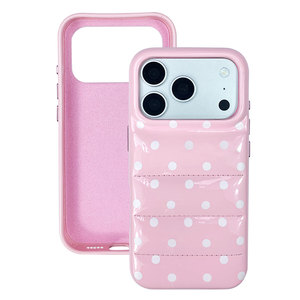
Light Pink White Polka Dot Puffy Phone Case for iPhone 18 Pro Max Glossy PU Cute Style Shockproof
Contact Us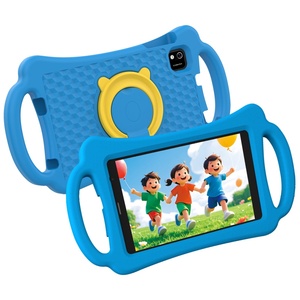
Cheap 8'' Android 13 2-in-1 Case Shockproof 4+64GB WiFi 3G WCDMA USB-C 3000mAh Educational Kids Tablet Phone
Contact Us
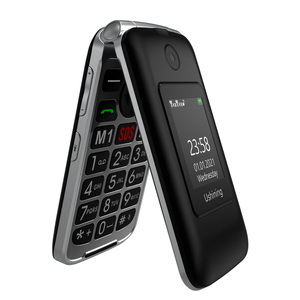
4g Rugged Keypad Phone Cellphone Push Button Phone Mini Sim Phone for Kid Emergency Communication
Contact Us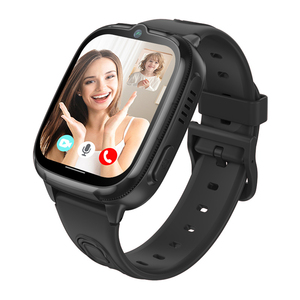
2026 D53 Children Smartwatch Sim Card SOS Call LBS+WIFI Positioning 1.83inch Screen Video Calling Class Mode
Contact Us
Car Door Handle Bowl Anti-Scratch Protector Sticker Car Paint Surface Guard Decal Scratch Cover Film
Contact Us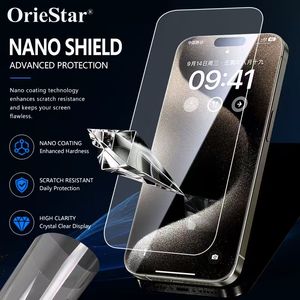
Factory Wholesale Matte Anti Scratch 2.5D Screen Protector Film Roll Durable Hard Coating Anti Abrasion
Contact Us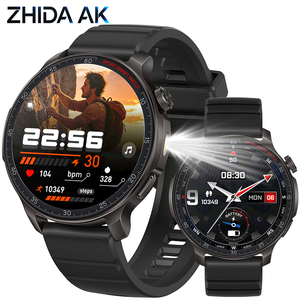
New HT48 Round Smartwatch 1.46-inch BT Call 1000mAh Sleep Exercise Monitoring Flashlight IP68 Waterproof
Contact UsExecutive Summary & Regulatory Framework: CE Certification Standards for Children Wearables
In the rapidly expanding market of child safety electronics, procurement officers, brand owners, and telecommunication distributors must navigate stringent international safety compliance mandates. A true CE Certified Kids Emergency Watch represents more than just a marketing claim—it denotes strict adherence to European Union directives governing Radio Equipment Directive (RED 2014/53/EU), Electromagnetic Compatibility (EMC), Low Voltage Safety (LVD EN 62368-1), and Specific Absorption Rate (SAR) limits.
As a leading OEM/ODM manufacturing factory and global exporter, our wearable safety devices are engineered from the PCB layout stage to ensure zero interference, bio-compatible chemical safety, and robust emergency signal transmission across 4G LTE-FDD/TDD and emerging 5G sub-6GHz bands. Children's sensitive skin and developing anatomical structures demand non-toxic materials compliant with EN 71-3 (Safety of Toys - Migration of Certain Elements) and REACH SVHC regulations, ensuring that wristbands made from food-grade liquid silicone do not leech plasticizers or heavy metals during prolonged wear.
Key Regulatory Directives Mandated for EU Importation:
- Radio Equipment Directive (RED 2014/53/EU): Guarantees efficient radio spectrum usage, preventing spectral spillover into emergency frequencies while maintaining RF stability during 4G VoLTE calls.
- SAR Compliance (EN 50566 / EN 62209-2): Human exposure limits to radiofrequency electromagnetic fields. Our smartwatches record SAR values significantly lower than the EU 2.0 W/kg limit (typically maintaining localized head/body SAR below 0.40 W/kg).
- Battery Safety (IEC/EN 62133-2 & UL 2054): High-density Cobalt Pure Lithium Polymer batteries fitted with dual-MOSFET protection ICs to eliminate risks of thermal runaway, overcharging, and mechanical puncture hazards.
- Data Protection & Cybersecurity (ETSI EN 303 645): Hardware-level boot security and encrypted TLS 1.3 data tunneling to prevent unauthorized third-party spoofing or location tracking hijacking.
Core Hardware Architecture & Emergency Tech Stack
Architected for absolute reliability when every second counts during critical SOS alerts.
Triple-Grid Positioning System
Combines multi-constellation GPS (L1+L5), Wi-Fi MAC sniffing, and LBS cell-tower triangulation to provide pinpoint location accuracy (<5 meters) even inside reinforced concrete school buildings or underground transit hubs.
Instant One-Touch Physical SOS
Dedicated ergonomic physical switch triggers an immediate call loop to 3 pre-configured parent emergency numbers while simultaneously transmitting a 5-second ambient audio clip and location coordinates to the parent control mobile application.
Controlled Sandbox Environment
Zero unmonitored internet browsing, no open third-party application stores, and zero access to addictive social media platforms. Devices are built on hardened RTOS or customized Android OS with parent-gated whitelists.
Engineering & Technical Specification Matrix
When selecting a B2B ODM partner for emergency smartwatches, engineering buyers must evaluate hardware durability, chipset power efficiency, and sensor integration. Below is an overview of our standardized enterprise manufacturing baseline compared to entry-level consumer wearables.
| Technical Parameter | Enterprise Factory Baseline (CE Certified) | Generic Consumer Grade Wearables |
|---|---|---|
| Main Processor (MCU/SoC) | Dual-Core ARM Cortex-A7 / Unisoc SL8541E or ASR3603 (Low Power) | Single-core 2G/3G legacy microcontrollers |
| Cellular Band Support | Global 4G VoLTE (B1/B3/B5/B7/B8/B20/B28/B38/B40/B41) | Restricted 2G (GSM 900/1800) subject to network shutdown |
| Positioning TTFF (Time to First Fix) | Hot Start < 2s | Cold Start < 28s (AGPS assisted) | Cold Start > 90s (Unassisted LBS only) |
| Enclosure & Waterproofing | IP68 (1.5m submergence for 60 mins) with acoustic membrane | IP65 or IP67 non-tested rubber sealing |
| Glass & Display Panel | Asahi / Corning Glass with anti-shatter OCA bonding, HD IPS | Standard acrylic / TN glass prone to shattering |
| Battery Density & Battery Life | 700mAh–1000mAh Pure Cobalt | 48–72 Hrs Standby | 400mAh Ternary Lithium | <24 Hrs Standby |
| Parental Control Protocol | AES-256 Encrypted Protocol with MyGabb / Custom Enterprise App | Unencrypted HTTP communication over public cloud |
Biocompatibility & Structural Durability Testing
Emergency smartwatches worn by children ages 5 to 14 face severe physical wear, including drops, wrist torsion, liquid submersion, and accidental impacts. Our factory subjects every production batch to rigorous Quality Assurance (QA) protocols:
- Micro-Drop Test: 5,000 drops from a height of 0.5 meters onto a steel plate to guarantee solder-joint integrity on the PCB.
- Thermal Shock Test: Cycling between -20°C and +65°C to ensure zero condensation inside the camera module and sensor housing.
- Chemical Resistance: Exposure to synthetic sweat, hand sanitizers, and sunscreen agents without degradation of the outer silicone shell or polycarbonate housing.
Global Market Insights: Sourcing & Procurement Trends (2025–2030)
The global market for smart safety wearables for children is undergoing a paradigm shift driven by digital health integration, regulatory tightening regarding internet access, and cellular network upgrades. B2B importers, telco operators, and brand owners must adapt their procurement strategies to align with these emerging macro trends:
1. The Sunset of 2G/3G & The Shift to 4G LTE / eSIM Wearables
With major telecom carriers across North America, Europe, and Asia-Pacific decommissioning legacy 2G and 3G infrastructure, procuring 2G-based emergency watches poses significant supply chain obsolescence risks. Modern procurement mandates 4G VoLTE or dual-mode LTE-M (Cat-M1) connectivity. Furthermore, the integration of eSIM (Embedded SIM) technology is gaining momentum, enabling over-the-air (OTA) provisioning, eliminating physical SIM tray vulnerabilities, and enhancing IP68 water sealing.
2. Hardware-Enforced Safety & "Zero-Browser" Policy
Educational institutions and safety-conscious parents are increasingly rejecting general-purpose smartwatches that allow unrestricted web access. Sourcing preferences have heavily tilted toward "Safe Tech by Design"—devices that strip away web browsers, social media apps, and open app stores at the firmware level. B2B buyers now seek platforms featuring parent-managed contact whitelists, automated school mode (disabling interactive features during class hours), and AI-driven content filtering for messages.
3. AI-Assisted Geofencing & Fall Detection Sensors
Next-generation emergency wearables incorporate 6-axis MEMS accelerometers combined with machine learning algorithms to detect abrupt impact events or abnormal motion patterns indicative of a fall or physical altercation. Smart geofencing now utilizes historical movement analytics to alert parents when a child deviates from their usual route home from school, shifting emergency safety from reactive calling to proactive risk mitigation.
4. Sustainable Materials & Modular OEM Packaging
Corporate sustainability directives in Europe (ESG compliance) require exporters to adopt Post-Consumer Recycled (PCR) plastics in watch casings and biodegradable soy-ink paper packaging. Modular component layout on internal PCBs is also being implemented to facilitate battery replacement and electronic waste reduction.
Enterprise Factory OEM/ODM Capabilities
Why leading global telecommunications brands and specialized child safety companies partner with our manufacturing facility.
Turnkey Firmware Customization
Our in-house software engineering team provides complete OS customization, including branded boot animations, pre-installed client APKs, custom UI themes, and server-side API integration with your proprietary parent control applications.
Precision Automated SMT Lines
Equipped with high-speed Yamaha and Fuji Surface Mount Technology (SMT) lines, 3D SPI (Solder Paste Inspection), and AOI (Automated Optical Inspection) systems ensuring flawless SMT placement and ultra-low defect rates (<50 PPM).
Complete Quality & Regulatory Traceability
Every single manufactured watch is assigned a unique IMEI and serial number linked to raw material lot codes, factory calibration data, RF test reports (Agilent/Rohde & Schwarz stations), and final QA sign-offs for total supply chain transparency.
Frequently Asked B2B Procurement Questions (FAQ)
Technical, regulatory, and commercial answers for OEM buyers, distributors, and supply chain managers.