Featured Dual SIM & Wireless Terminal Hardware Showcase
Explore our flagship OEM/ODM production capabilities, ranging from rugged enterprise mobile phones and 5G smartphones to specialized kids safety smartwatches and accessories.
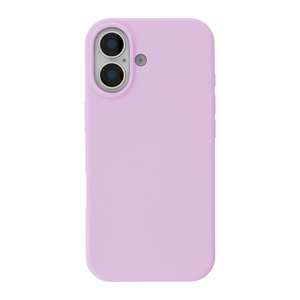
Hot selling Mag Cute Pink Smart Mobile Phone Case for iphone 17
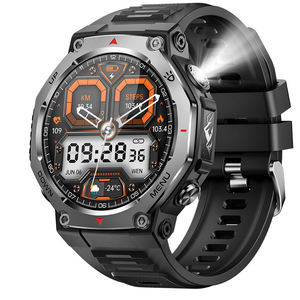
Smartwatch KT85 1.43 Inch AMOLED Touchscreen IP68 Waterproof Heart Rate Compass Sport Watch Unisex
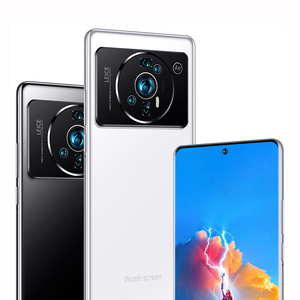
Best Gift for Kids Gaming Drawing Rugged Android Phone 3G+64GB Smartphone 6.8 Inch Dual Sim Cards 4G Mobile Phones
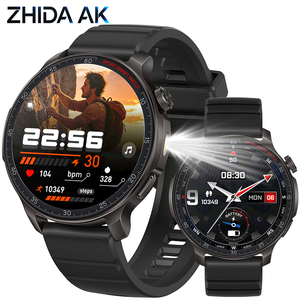
New HT48 Round Smartwatch 1.46-inch BT Call 1000mAh Sleep Exercise Monitoring Flashlight IP68 Waterproof Smartwatch Men's ODM
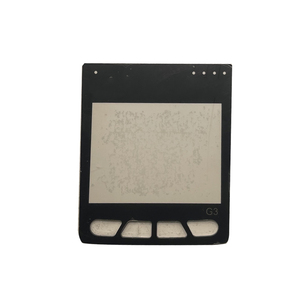
High Quality G3 HD Transparent Anti-scratch Lenz Screen Protector
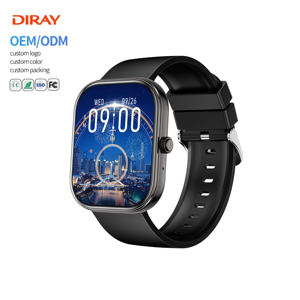
S3 Fitness Smart Watch 1.83 Inch IPS HD Display 100+ Sports Modes Heart Rate SpO2 Sleep Monitor IP68 Waterproof BT Call
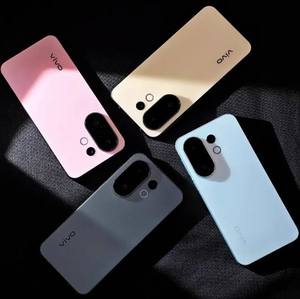
Smartphone2025 Best-selling item Vvo S30 Pro Mini 5G Smartphone With 6.31" AMOLED 120Hz Display / Dimensity 9300+ / Dual SIM
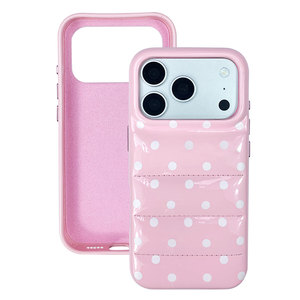
Light Pink White Polka Dot Puffy Phone Case for iPhone 18 Pro Max Glossy PU Cute Style Shockproof Full Coverage Protective Cover
Whitepaper: B2B Procurement Standards for CE Certified Dual SIM Mobile Devices
In the rapidly evolving telecommunications market, sourcing telecommunication products requires strict adherence to international regulatory standards, robust radio frequency co-existence mechanisms, and seamless logistics compliance. As a premier CE Certified Dual SIM Phone Manufacturer and Factory, our enterprise facility integrates advanced RF engineering, automated Surface Mount Technology (SMT), and end-to-end quality control to produce compliant mobile devices for telecom operators, brand owners, and enterprise distributors across Europe, South America, and Asia.
Regulatory Gain Insight: Navigating European Union CE certification requires compliance not only with base electromagnetic compatibility (EMC) standards but also with the stringent Radio Equipment Directive (RED 2014/53/EU), Specific Absorption Rate (SAR) health thresholds, and eco-design directives including RoHS 3 (EU 2015/863) and REACH compliance.
1. Navigating CE RED (2014/53/EU) Certification Requirements
European conformity (Conformité Européenne) for dual SIM mobile hardware is governed primarily by the RED framework. When manufacturing dual SIM devices operating across simultaneous cellular networks (such as 5G NR + 4G LTE or dual 4G VoLTE), cross-talk radio interference must be suppressed at the physical layer layout stage.
Our OEM manufacturing process mandates fully shielded RF chambers during testing to verify:
- RF Spectrum Efficiency (EN 301 908-1 / EN 301 511): Ensuring baseband frequency stability, transmitter spurious emissions, and receiver selectivity across EU 3GPP operational bands (e.g., Band 1, Band 3, Band 7, Band 8, Band 20, and 5G n78/n28).
- Electromagnetic Compatibility (EN 301 489-1/-52): Guaranteeing device immunity against electrostatic discharge (ESD) up to 8kV contact and 15kV air discharge, alongside power surge protection.
- Electrical Safety & High-Voltage Protection (EN 62368-1): Implementing multi-layered thermal dissipation and lithium-ion battery management system (BMS) overcharge protection circuits.
- SAR Health & Safety Compliance (EN 50360 / EN 62209-1): Ensuring local head and body Specific Absorption Rate remains strictly below the EU statutory threshold of 2.0 W/kg averaged over 10 grams of tissue.
2. Dual SIM Dual Standby (DSDS) vs. Dual SIM Dual Active (DSDA) Architecture
Modern commercial dual SIM devices rely on two dominant radio frequency architectures: Dual SIM Dual Standby (DSDS) and Dual SIM Dual Active (DSDA). Choosing the correct architecture impacts bill-of-materials (BOM) cost, battery power budget, and thermal profiles.
DSDS (Dual SIM Dual Standby)
Utilizes a shared baseband processor and single RF transceiver pipeline. Both SIM cards register on the cellular network simultaneously; however, when an active voice call occurs on SIM 1, SIM 2 transitions to idle state to save power and simplify RF front-end design. Ideal for cost-sensitive enterprise mobile devices, safe kids phones, and standard consumer smartphones.
DSDA & eSIM Hybrid Systems
Integrates dual independent RF transceivers or a physical Nano-SIM + embedded SIM (eSIM) combination. Allows simultaneous data downloading on SIM 2 while maintaining a high-definition VoLTE call on SIM 1. Essential for mission-critical logistics, rugged enterprise scanners, and high-performance flagship devices.
3. Firmware Customization & Enterprise MDM Pre-Integration
Hardware quality represents only half of a successful OEM procurement project. As an experienced dual SIM phone factory, our software engineering division provides custom Android OS (AOSP) builds, tailored boot animations, carrier-specific APN auto-configurations, and deep integration with Mobile Device Management (MDM) platforms such as Knox, AirWatch, or custom closed-loop management software.
Why Top Global Brands Partner With Our OEM/ODM Factory
We bridge the gap between initial industrial design and high-volume mass production, offering scalable manufacturing solutions validated by international certification laboratories.
High-Precision SMT & Cleanrooms
Our manufacturing complex houses automated Fuji and Panasonic high-speed SMT placement lines capable of handling 0201 component packages, micro-BGA chips, and multi-layer PCBAs with 99.98% first-pass yield.
Built-In Hardware Security
Following privacy-first manufacturing principles, our devices support hardware-level encryption (TrustZone execution environments) without invasive third-party bloatware, protecting user privacy and preventing unauthorized data leaks.
Full Traceability & QA/QC
Every motherboard and assembled phone is stamped with a unique laser-etched matrix code tracking component batches, operator IDs, aging test data (48-hour burn-in), drop test reports, and water-resistance verifications.
Future Procurement Trends in Dual SIM & Mobile Device Manufacturing (2025–2030)
Procurement directors and product managers must anticipate multi-year industry shifts to avoid inventory obsolescence and align with incoming legislative directives across global markets.
Trend A: The Rapid Adoption of 5G Standalone (SA) Dual SIM Aggregation
As telecom operators globally sunset 2G and 3G networks and transition away from Non-Standalone (NSA) 5G networks, factory procurement is pivoting heavily toward 5G SA dual SIM solutions. Enterprise buyers require baseband modems capable of dynamic carrier aggregation across two separate 5G networks, providing uninterrupted data redundancy for field service technicians, fleet management, and high-bandwidth emergency responders.
Trend B: EU Right-to-Repair Directive & Eco-Design Regulations
European buyers must prepare for upcoming EU battery regulations requiring easily removable and replaceable batteries, standardized USB Type-C charging ports across all handheld devices, and guaranteed FOTA software update support for a minimum of 5 years post-launch. Our factory has proactive engineering modular casing architecture that simplifies battery swaps without sacrificing IP68 water resistance standards.
Trend C: AI-Driven Radio Frequency (RF) Tuning & Battery Efficiency
Next-generation CE certified dual SIM phones are incorporating localized AI coprocessors that dynamically monitor antenna impedance and signal degradation caused by user hand placement or metallic surroundings. By adjusting power output in real-time, battery consumption during weak-signal states is reduced by up to 22%, keeping SAR values exceptionally low.
Ready to OEM/ODM Your CE Certified Mobile Project?
Contact our engineering consultancy team today to request hardware samples, factory audit documentation, or customized quotation packages tailored to your market specs.
Inquire NowFrequently Asked Procurement Questions (FAQ)
Detailed technical, compliance, and logistics answers for volume buyers, enterprise importers, and brand managers.